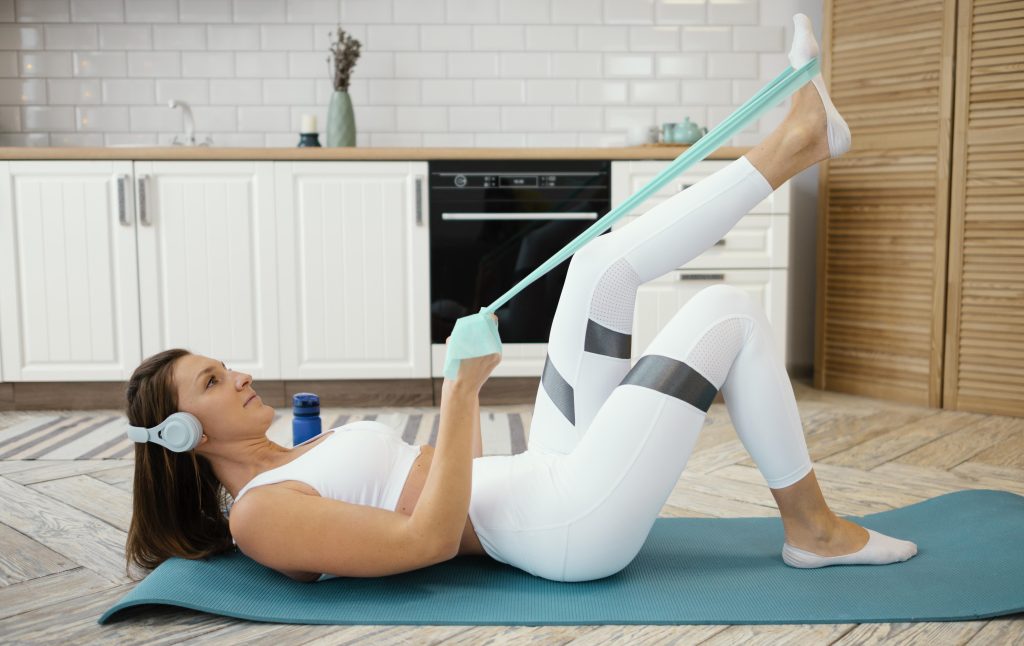
The landscape of home fitness has shifted dramatically in recent years, moving away from the necessity of bulky, expensive machinery toward versatile, space-efficient tools. Among these, resistance bands have emerged as a cornerstone for effective strength training, particularly for those just starting their fitness journey. Unlike free weights, which rely on gravity and offer constant resistance, bands provide variable resistance, meaning the tension increases as the band stretches. This unique mechanical advantage challenges muscles differently throughout the entire range of motion, often leading to greater muscle activation and joint stability. For beginners looking to build a solid foundation without leaving the house, a structured resistance band plan offers a safe, scalable, and highly effective pathway to full-body conditioning.
Understanding the Mechanics of Variable Resistance
To maximize the benefits of any workout, it is essential to understand the tool being used. Resistance bands operate on the principle of elastic tension. As the band is stretched further from its anchor point, the resistance becomes heavier. This contrasts with dumbbells, where the weight remains constant regardless of the angle of movement. This variable resistance profile mimics the natural strength curve of human muscles, which are often stronger at certain points in a movement than others. For instance, during a bicep curl, the muscle is typically stronger at the top of the movement; a band provides the most resistance exactly at that peak contraction, forcing the muscle to work harder where it is mechanically advantaged.
Research supports the efficacy of elastic resistance in building strength and muscle mass comparable to traditional free weights. Studies published in peer-reviewed journals, such as those found through the National Institutes of Health, indicate that elastic resistance training can significantly improve muscular strength and endurance in both young and older adults. The continuous tension provided by the band also eliminates “momentum,” a common issue where lifters use body sway to move heavy weights, thereby reducing the effectiveness of the exercise and increasing injury risk. By removing momentum, bands ensure that the target muscle group does the majority of the work, fostering better mind-muscle connection and safer progression for novices.
Furthermore, the versatility of bands allows for multi-planar movements. Traditional gym machines often lock the user into a fixed path of motion, which can sometimes place unnatural stress on joints if the machine’s geometry does not match the user’s limb lengths. Bands, however, allow the body to move naturally in three dimensions. This freedom is crucial for developing functional strength—the kind of strength used in daily activities like lifting groceries, playing with children, or carrying luggage. The American Council on Exercise frequently highlights the importance of functional movement patterns in beginner programming, noting that tools allowing natural joint articulation reduce the likelihood of overuse injuries while improving overall coordination.
Selecting the Right Equipment for Success
Before diving into specific exercises, selecting the appropriate equipment is a critical step often overlooked by beginners. Not all resistance bands are created equal; they vary in material, construction, and resistance levels. The most common types include loop bands (often used for lower body and physical therapy), tube bands with handles (ideal for upper body pulling and pushing movements), and figure-eight bands. For a comprehensive full-body routine, a set of stackable tube bands with door anchors and handles is generally the most versatile choice. These sets typically come with multiple bands of different colors, each representing a specific resistance level, usually ranging from light (5-10 lbs) to extra heavy (30-50 lbs or more).
Durability and safety are paramount when choosing bands. Latex bands offer superior elasticity and snap-back but are unsuitable for individuals with latex allergies; in such cases, thermoplastic elastomer (TPE) bands are a viable alternative. It is crucial to inspect bands regularly for signs of wear, such as small tears, whitening of the material, or loss of elasticity, as a snapping band can cause significant injury. Reputable manufacturers often provide guidelines on care and maintenance, and resources from organizations like the Mayo Clinic emphasize the importance of equipment safety in home exercise settings to prevent avoidable accidents. Investing in a high-quality set with reinforced handles and secure carabiners ensures longevity and peace of mind during intense workouts.
Another consideration is the anchoring system. A sturdy door anchor is indispensable for exercises like rows, chest presses, and lat pulldowns. The anchor must be placed on a solid door, ideally one that opens away from the user, and secured on the hinge side to prevent the door from swinging open during exertion. Understanding how to properly set up these anchors is part of the learning curve. Many fitness equipment retailers provide detailed setup guides, and visual demonstrations from certified trainers on platforms associated with the National Strength and Conditioning Association can offer valuable insights into safe anchoring techniques. Proper setup ensures that the resistance vector remains consistent and that the equipment does not become a projectile hazard.
Designing a Balanced Full-Body Routine
A well-structured beginner program must address all major muscle groups to ensure balanced development and prevent muscular imbalances that can lead to poor posture and injury. A full-body approach is generally recommended for beginners, allowing for frequent stimulation of muscle groups with adequate recovery time in between sessions. Ideally, a resistance band workout should be performed two to three times per week, with at least one rest day between sessions to facilitate muscle repair and growth. The routine should encompass pushing movements (chest, shoulders, triceps), pulling movements (back, biceps), lower body dominance (quads, hamstrings, glutes), and core stabilization.
The concept of progressive overload is central to any strength training program, including those using bands. Since one cannot simply add a 5-pound plate as with dumbbells, progression with bands is achieved by increasing the thickness of the band, shortening the grip on the band to increase tension, slowing down the tempo of the movement, or increasing the number of repetitions and sets. The Centers for Disease Control and Prevention recommends that adults engage in muscle-strengthening activities of moderate or high intensity that involve all major muscle groups on two or more days a week. A band routine fits this guideline perfectly, offering a scalable method to meet these public health recommendations without the need for a gym membership.
Below is a comparison of common resistance band exercises categorized by muscle group, highlighting the primary movement pattern and the specific benefit for beginners.
| Muscle Group | Exercise Name | Primary Movement Pattern | Key Benefit for Beginners |
|---|---|---|---|
| Chest | Standing Band Chest Press | Horizontal Push | Builds pushing strength without shoulder strain common in bench press |
| Back | Seated or Standing Rows | Horizontal Pull | Improves posture and counteracts slouching from desk work |
| Shoulders | Lateral Raises | Abduction | Isolates deltoids safely with constant tension |
| Legs (Quads) | Band Squats | Knee Extension/Hip Flexion | Adds resistance to bodyweight squats, enhancing glute and quad activation |
| Legs (Hamstrings) | Lying Leg Curls | Knee Flexion | Targets hamstrings effectively, a muscle group often neglected by beginners |
| Glutes | Clamshells or Lateral Walks | Hip Abduction/External Rotation | Activates glute medius for hip stability and knee health |
| Arms (Biceps) | Standing Bicep Curls | Elbow Flexion | Provides peak resistance at the top of the curl for maximum contraction |
| Arms (Triceps) | Overhead Tricep Extensions | Elbow Extension | Safely loads the triceps without the elbow stress of heavy dumbbells |
| Core | Pallof Press | Anti-Rotation | Teaches core stability and protects the spine better than crunches |
Executing the Core Exercises with Precision
Lower Body Foundation: Squats and Hinges
The squat is often termed the “king of exercises,” and for good reason. It engages the quadriceps, hamstrings, glutes, and core simultaneously. To perform a band squat, stand on the center of the band with feet shoulder-width apart. Hold the handles at shoulder height, palms facing forward. Descend into a squat by pushing the hips back and bending the knees, keeping the chest up and weight in the heels. As you stand up, push through the heels and squeeze the glutes at the top. The band adds resistance primarily at the top of the movement, where the legs are strongest, ensuring the muscles are challenged throughout. For those new to the movement, focusing on depth and form is more important than the thickness of the band. Guidance on proper squat mechanics can be further explored through educational materials from the American College of Sports Medicine.
Complementing the squat is the hip hinge, best represented by the Romanian Deadlift (RDL). This movement targets the posterior chain—hamstrings and glutes—which is crucial for athletic performance and lower back health. Stand on the band with feet hip-width apart, holding the handles in front of the thighs. With a slight bend in the knees, hinge at the hips, pushing them backward while keeping the back flat. Lower the hands until a stretch is felt in the hamstrings, then drive the hips forward to return to standing. The tension in the band increases as the torso lowers, providing a significant challenge to the hamstrings. This exercise teaches the vital skill of separating hip movement from knee movement, a pattern essential for safe lifting in daily life.
Upper Body Push and Pull Dynamics
For the upper body, the standing chest press is a fundamental pushing movement. Anchor the band at chest height behind you (using a door anchor). Hold the handles and step forward to create tension. Press the hands forward until the arms are extended, squeezing the chest muscles, then slowly return to the start. This movement mimics the bench press but requires significant core engagement to maintain stability, as there is no bench to support the back. It is an excellent example of a compound movement that builds functional strength.
Balancing the push is the pull, executed through the seated or standing row. Anchor the band at chest height in front of you. Sit on the floor with legs extended or stand with knees slightly bent. Pull the handles toward the ribcage, squeezing the shoulder blades together. This action strengthens the rhomboids and latissimus dorsi, muscles that are often weak in individuals who spend hours at computers. Strengthening the back is critical for maintaining an upright posture and preventing the rounded shoulders associated with modern sedentary lifestyles. The National Institute of Arthritis and Musculoskeletal and Skin Diseases often underscores the role of strengthening exercises in maintaining musculoskeletal health and preventing chronic pain conditions related to poor posture.
Shoulder health is another priority. Lateral raises with bands are highly effective for building the medial deltoids, giving the shoulders a broader appearance and improving overhead stability. Stand on the band, holding the handles at the sides. Raise the arms out to the sides until they reach shoulder height, keeping a slight bend in the elbows. The variable resistance ensures that the shoulders are worked hardest at the top of the range, where they are most stable. Conversely, face pulls (pulling the band towards the face with elbows high) are exceptional for rear deltoid and rotator cuff health, acting as a prehabilitative measure against shoulder impingement.
Core Stability and Anti-Rotation
Core training with bands moves beyond simple flexion (crunches) to focus on stability and anti-rotation. The Pallof Press is a standout exercise for this purpose. Anchor the band at chest height to the side. Stand perpendicular to the anchor point, holding the handle with both hands at the chest. Press the hands straight out, resisting the band’s pull to rotate the torso. Hold for a moment, then return to the chest. This forces the core muscles to fire isometrically to prevent rotation, building a stable midsection that protects the spine. This type of training is widely advocated by physical therapists and strength coaches for its carryover to real-world activities and injury prevention.
Structuring Sets, Reps, and Recovery
For a beginner, the goal is to establish a habit and master movement patterns before chasing maximum intensity. A standard starting protocol involves performing 2 to 3 sets of each exercise, with 10 to 15 repetitions per set. The repetition range should be challenging; the last few reps of each set should feel difficult to complete with proper form, but not impossible. If a user can easily perform 20 reps, the band resistance is too light, and they should switch to a heavier band or shorten their grip. Conversely, if they cannot complete 8 reps with good form, the resistance is too high.
Rest periods between sets should be sufficient to allow for partial recovery, typically ranging from 60 to 90 seconds. This duration allows the ATP-PC energy system to replenish enough to maintain performance in the subsequent set without letting the heart rate drop too low, keeping the workout efficient. Consistency is more valuable than intensity in the early stages. Adhering to a schedule of three non-consecutive days per week allows for 48 hours of recovery between sessions, which is when the actual muscle strengthening occurs. The World Health Organization guidelines on physical activity reinforce the idea that regular, moderate-intensity muscle-strengthening activity yields significant health benefits, reducing the risk of chronic diseases and improving mental well-being.
Recovery is not just about rest days; it includes hydration, nutrition, and sleep. Muscles repair and grow during sleep, and adequate protein intake is necessary to support this process. While bands are low impact, the microscopic tears in muscle fibers caused by resistance training require resources to heal. Ignoring recovery can lead to overtraining, stagnation, or injury. Beginners should listen to their bodies; distinct muscle soreness (DOMS) is normal, but sharp joint pain is a signal to stop and reassess form or resistance levels.
Troubleshooting Common Challenges and Safety
One of the most common challenges beginners face is the lack of immediate feedback compared to heavy weights. Because bands do not have a numerical weight value printed on them that translates directly to pounds in every position, users may struggle to gauge progress. Keeping a workout log is essential. Recording which color band was used, the number of reps, and the perceived difficulty helps track improvements over time. Another issue is band slippage. Ensuring that the band is securely under the feet or properly anchored is vital. Wearing shoes with a textured sole can help prevent the band from sliding off the foot during lower body exercises.
Safety protocols must be strictly observed. Always inspect the band before use. If a band shows any signs of fraying or cracking, it must be discarded immediately. When performing exercises near the face, such as face pulls or overhead presses, wearing eye protection is a prudent, albeit rarely practiced, safety measure recommended by some equipment manufacturers. Additionally, never release a stretched band abruptly; control the return phase (eccentric movement) to prevent the band from snapping back and striking the body or damaging surroundings. The eccentric phase is also where significant muscle damage and subsequent growth occur, so controlling the descent is beneficial for results as well as safety.
Form breakdown is another risk. As fatigue sets in, users may compromise their posture, rounding the back during rows or letting knees cave in during squats. It is better to end a set early with perfect form than to complete the target reps with poor mechanics. Video recording oneself or using a mirror can provide visual feedback to correct these issues. Online resources from certified institutions, such as exercise libraries maintained by the National Academy of Sports Medicine, offer detailed visual cues and corrections for common form errors, serving as a valuable reference for self-taught athletes.
Maximizing Long-Term Progression
As the beginner advances, the workout plan must evolve to continue providing a stimulus for adaptation. This concept, known as periodization, can be simplified for home users by altering variables every 4 to 6 weeks. Changes might include switching from full-body workouts to an upper/lower split, increasing the volume (total sets), or incorporating advanced techniques like supersets (performing two exercises back-to-back with no rest). For example, supersetting a chest press with a row creates a high-intensity stimulus that improves muscular endurance and cardiovascular fitness simultaneously.
Another method of progression is manipulating the tempo. Slowing down the eccentric (lowering) phase to 3 or 4 seconds increases the time under tension, making a lighter band feel significantly heavier. This technique is particularly useful for those who may not yet have access to very heavy bands but still need to challenge their strength limits. Isometric holds, where the user holds the most challenging part of the movement for several seconds, can also be integrated to build static strength and tendon resilience. These variations keep the training stimulus novel and prevent plateaus, ensuring continuous improvement.
It is also important to integrate mobility work alongside strength training. Resistance bands are excellent tools for dynamic stretching and mobility drills. Using a light band to assist in shoulder dislocations or deep squat stretches can improve range of motion, which in turn allows for better performance in strength exercises. A holistic approach that combines strength, mobility, and recovery creates a resilient physique capable of handling increased demands over time. The integration of these elements reflects a mature understanding of fitness, moving beyond simple calorie burning to comprehensive physical development.
Frequently Asked Questions
Q: How often should a beginner perform resistance band workouts?
A: For optimal results and recovery, beginners should aim for 2 to 3 full-body sessions per week. This frequency allows for at least 48 hours of rest between sessions targeting the same muscle groups, which is crucial for muscle repair and growth. Consistency is key; sticking to a regular schedule yields better long-term results than sporadic, high-intensity bursts.
Q: Can resistance bands build significant muscle mass?
A: Yes, resistance bands can effectively build muscle mass (hypertrophy). Muscle growth is driven by mechanical tension and metabolic stress, both of which bands provide. By progressively increasing the resistance (using thicker bands or shortening the grip) and training close to failure, users can stimulate muscle growth comparable to free weights, provided the nutrition and recovery protocols are also aligned.
Q: What if I don’t have a door anchor?
A: While a door anchor expands exercise variety, many effective exercises can be performed without one. Movements like squats, lunges, bicep curls, overhead presses, and lateral raises only require standing on the band. For rowing movements, one can wrap the band around a sturdy pole, tree, or even have a partner hold the center of the band to provide resistance.
Q: How do I know if the resistance is too heavy or too light?
A: The resistance is appropriate if you can complete the target number of repetitions (e.g., 12-15) with proper form, but the last 2-3 repetitions feel challenging. If you can easily perform more than 20 reps, the band is too light. If you cannot complete 8 reps or your form breaks down significantly before reaching the target, the band is too heavy.
Q: Are resistance bands safe for people with joint issues?
A: Generally, yes. Resistance bands provide a smoother, more joint-friendly resistance curve compared to free weights, as they reduce shear force on the joints. However, individuals with existing joint conditions should consult with a healthcare provider or physical therapist before starting. Starting with light resistance and focusing on controlled movements is essential for safety.
Q: How long do resistance bands last?
A: The lifespan of a resistance band depends on usage frequency, storage conditions, and material quality. With regular use and proper care (keeping them out of direct sunlight and away from sharp objects), high-quality bands can last from 6 months to over a year. Regular inspection for cracks or tears is necessary to prevent sudden breakage during use.
Q: Can I lose weight using only resistance bands?
A: Weight loss is primarily driven by a caloric deficit, which can be achieved through diet and increased physical activity. Resistance band training builds muscle, which boosts metabolism, and can be structured into high-intensity circuits to elevate heart rate and burn calories. While they are an effective tool for weight management, they should be part of a broader lifestyle approach that includes nutritional adjustments.
Conclusion
Embarking on a fitness journey at home with resistance bands offers a unique blend of convenience, safety, and effectiveness that is hard to replicate with other equipment. The ability to train the entire body with a tool that fits in a drawer removes many of the traditional barriers to entry, such as cost, space, and intimidation. By understanding the mechanics of variable resistance, selecting the right equipment, and adhering to a structured, progressive plan, beginners can achieve significant improvements in strength, mobility, and overall health. The science behind elastic resistance is robust, supporting its use as a legitimate modality for everything from rehabilitation to athletic performance.
Success in this endeavor relies not on the complexity of the exercises but on the consistency of execution and the patience to progress gradually. The principles of proper form, adequate recovery, and progressive overload remain universal, regardless of whether one is lifting iron plates or stretching latex bands. As the body adapts and grows stronger, the versatility of the bands allows the workout to evolve, ensuring that the training remains challenging and engaging. This adaptability makes resistance bands a lifelong fitness companion, capable of scaling with the user from their first rep to advanced athletic feats.
Ultimately, the value of a resistance band workout lies in its empowerment of the individual. It places the control of health and fitness squarely in the hands of the user, requiring nothing more than a small investment and a commitment to movement. Whether the goal is to build muscle, improve posture, enhance athletic performance, or simply maintain independence and vitality into older age, the resistance band is a powerful ally. By integrating these tools into a regular routine, individuals can forge a stronger, healthier physique within the comfort of their own homes, proving that effective fitness is accessible to everyone, everywhere.