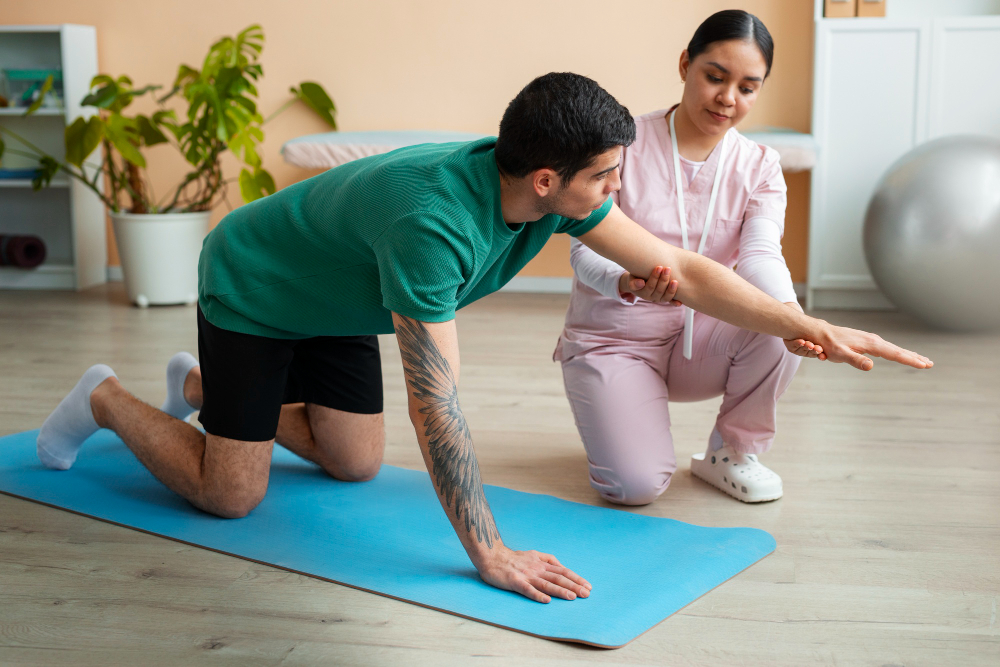
Chronic joint pain and reduced mobility are among the most common barriers to an active lifestyle, affecting millions of individuals across all age groups. Whether stemming from osteoarthritis, previous injuries, or the natural aging process, the sensation of stiffness and discomfort often leads to a sedentary cycle that exacerbates the very problem it seeks to avoid. However, medical consensus overwhelmingly supports the notion that movement is medicine. The key lies not in avoiding activity, but in selecting the right type of activity. Low-impact exercises provide a powerful solution, offering the cardiovascular and muscular benefits of workout routines while minimizing stress on weight-bearing joints. By understanding the mechanics of these movements and implementing a structured approach, individuals can reclaim their range of motion, reduce inflammation, and build a foundation for long-term physical resilience.
The Science of Low-Impact Movement
To appreciate the value of low-impact exercise, one must first understand the biomechanics of joint stress. High-impact activities, such as running or jumping, generate ground reaction forces that can exceed several times a person’s body weight with every step. For a compromised knee, hip, or ankle, this repetitive pounding can accelerate cartilage degradation and trigger inflammatory responses. In contrast, low-impact exercises are defined by the maintenance of at least one foot on the ground at all times or by performing movements in a buoyant environment like water. This distinction drastically reduces the load placed on the skeletal structure while still engaging the musculoskeletal system effectively.
Research consistently demonstrates that controlled, low-stress movement stimulates the production of synovial fluid, the natural lubricant within joint capsules. This fluid is essential for nourishing cartilage, which lacks its own blood supply and relies on the compression and decompression of movement to absorb nutrients. When joints remain static due to pain avoidance, this nutrient exchange slows, leading to further stiffness and degeneration. Engaging in aquatic therapy or stationary cycling allows for this vital pumping action without the destructive shear forces associated with high-impact sports. The result is a paradoxical but well-documented outcome: moving more often leads to feeling less pain, provided the movement is curated correctly.
Furthermore, low-impact training prioritizes muscular endurance and stability over explosive power. Strong muscles act as shock absorbers, distributing forces that would otherwise be transmitted directly to the joint surfaces. For instance, strengthening the quadriceps and hamstrings provides critical support for the knee joint, effectively offloading pressure from the meniscus and articular cartilage. This protective mechanism is central to rehabilitation protocols recommended by orthopedic specialists and physical therapists worldwide. By focusing on form, control, and consistency, individuals can rebuild the structural integrity required for pain-free daily functioning.
Aquatic Excellence: Harnessing the Power of Water
Water-based exercise stands out as perhaps the most accessible and effective modality for those suffering from significant joint pain or severe mobility limitations. The physics of buoyancy offers a unique advantage; when submerged to waist level, the body bears only about 50% of its weight, and at chest level, this reduces to approximately 25%. This dramatic reduction in gravitational load allows individuals to perform movements that would be impossible or excruciating on land. Hydrotherapy programs utilize this principle to facilitate early-stage rehabilitation, enabling patients to regain range of motion without fear of re-injury.
Beyond buoyancy, water provides natural resistance in all directions. Unlike free weights or machines that rely on gravity, water resistance increases proportionally with the speed of movement. This allows for a self-regulating workout where the individual controls the intensity simply by moving faster or slower. For someone with fragile joints, this means they can push their limits safely; if a movement causes discomfort, slowing down immediately reduces the resistance. Additionally, the hydrostatic pressure of water helps reduce swelling and edema in the extremities, promoting better circulation and faster recovery post-exercise.
Common aquatic exercises include water walking, aqua jogging, and specific range-of-motion drills performed in the shallow end of a pool. Water walking mimics the gait cycle of land walking but with significantly less impact, making it an ideal transition for those returning to activity after surgery or injury. Aqua jogging involves wearing a flotation belt to maintain an upright position while running in deep water, providing a rigorous cardiovascular workout with zero impact on the hips and knees. Many community centers and hospitals offer specialized aquatic fitness classes designed specifically for arthritis management, providing a structured environment with professional supervision to ensure proper technique and safety.
Cycling: Building Strength with Minimal Friction
Cycling represents another cornerstone of low-impact conditioning, offering an exceptional balance between cardiovascular health and joint preservation. Whether performed on a stationary bike indoors or on a road bicycle outdoors, the circular pedaling motion keeps the feet in constant contact with the pedals, eliminating the jarring impact of foot strikes. This continuous, fluid movement encourages synovial fluid circulation in the knee and hip joints while simultaneously strengthening the major muscle groups of the lower body. The benefits of stationary cycling are particularly notable for knee osteoarthritis patients, as studies have shown it can reduce pain and improve function comparably to land-based walking but with fewer adverse events.
Stationary bikes offer the added advantage of adjustability. Resistance levels can be precisely calibrated to match the user’s current strength and pain tolerance, allowing for progressive overload without compromising joint safety. Recumbent bikes, which feature a seated position with back support and pedals located in front of the body, are especially beneficial for individuals with lower back issues or balance concerns. This configuration reduces strain on the lumbar spine while still targeting the glutes and leg muscles. Upright stationary bikes, resembling traditional bicycles, engage the core more actively and may be preferable for those looking to improve posture alongside joint health.
For those who prefer outdoor activity, road cycling on smooth pavement provides the psychological benefit of changing scenery and fresh air, which can enhance adherence to an exercise routine. However, terrain selection is critical; uneven surfaces or steep hills can introduce unwanted stress to the joints. Electric-assist bicycles (e-bikes) have emerged as a valuable tool in this category, allowing riders to tackle inclines with reduced physical exertion, thereby preventing the joint strain associated with pushing heavy gears. Regardless of the setting, maintaining a proper seat height is essential to prevent knee hyperextension or excessive flexion, both of which can aggravate existing conditions. A professional bike fitting or consultation with a physical therapist can ensure the setup aligns with individual biomechanical needs.
The Elliptical and Stepper Machines: Simulating Gait Safely
Elliptical trainers and stair steppers bridge the gap between walking and running, simulating natural gait patterns without the associated impact. The elliptical machine, in particular, is engineered to keep the feet planted on pedals throughout the entire motion, creating an oval-shaped path that mimics running mechanics while neutralizing ground reaction forces. This makes it an excellent choice for individuals who miss the rhythmic motion of jogging but cannot tolerate the pounding on their joints. The effectiveness of elliptical training extends beyond the lower body; many models include moving handlebars, which engage the upper body and core, providing a comprehensive full-body workout that elevates heart rate efficiently.
One of the distinct advantages of the elliptical is the ability to move in reverse. Pedaling backward shifts the emphasis to different muscle groups, particularly the hamstrings and calves, promoting balanced muscular development around the knee joint. This variation can help correct muscle imbalances that often contribute to joint pain and poor alignment. Furthermore, the smooth glide of the machine reduces shear forces on the knee ligaments, a common concern for those with anterior cruciate ligament (ACL) history or patellofemoral pain syndrome.
Stair steppers, while slightly more demanding, offer a focused method for building lower body strength and endurance. Modern stepper machines often feature independent pedal movement and handrails for stability, allowing users to control the depth of each step. For joint-sensitive individuals, limiting the range of motion to a comfortable level and avoiding “bottoming out” the pedals can prevent excessive compressive forces on the knees. Both ellipticals and steppers allow for interval training, where periods of higher intensity are alternated with recovery phases. This approach improves cardiovascular fitness and metabolic health without requiring prolonged periods of continuous stress on the joints, making the workout more manageable and sustainable.
Mind-Body Disciplines: Yoga and Tai Chi for Flexibility and Balance
While aerobic conditioning is vital, flexibility and balance are equally critical components of joint health and mobility. Mind-body disciplines such as yoga and Tai Chi offer a holistic approach that addresses stiffness, improves proprioception (the body’s sense of position), and reduces the risk of falls. Therapeutic yoga has been adapted extensively for clinical populations, focusing on gentle stretching and strengthening poses that can be modified with props like blocks, straps, and chairs. These modifications ensure that individuals with limited range of motion can participate safely, gradually increasing their flexibility over time.
Yoga emphasizes controlled breathing and mindful movement, which can help manage the perception of pain. Chronic pain often leads to guarding behaviors, where muscles tense up protectively, further restricting movement and creating a cycle of stiffness. Through deliberate stretching and relaxation techniques, yoga helps release this tension, restoring length to tight muscles and improving joint articulation. Poses such as the seated forward bend, cat-cow stretch, and warrior variations (modified as needed) target the spine, hips, and shoulders, areas commonly affected by arthritis and sedentary lifestyles. Regular practice has been linked to reduced inflammatory markers in the blood, suggesting a physiological benefit beyond mere mechanical stretching.
Tai Chi, often described as “meditation in motion,” involves slow, flowing sequences of movements that shift weight smoothly from one leg to the other. This continuous weight transfer challenges balance and strengthens the stabilizing muscles around the ankles, knees, and hips without high-impact loading. Extensive research supports Tai Chi for arthritis management, showing significant improvements in pain reduction, physical function, and fall prevention among older adults. The slow pace allows participants to focus on alignment and body mechanics, fostering a deeper awareness of how their joints move in space. Both yoga and Tai Chi can be practiced in group settings or at home via guided videos, offering flexibility in how individuals integrate these practices into their daily routines.
Strength Training: The Foundation of Joint Support
A common misconception is that strength training is inherently dangerous for painful joints. In reality, targeted resistance training is one of the most effective interventions for managing joint pain and improving mobility. Weak muscles force joints to bear more load than they are designed to handle, accelerating wear and tear. By systematically strengthening the muscles surrounding a joint, individuals create a dynamic brace that stabilizes the area and absorbs shock. Resistance training guidelines from major health organizations emphasize the use of light weights, resistance bands, or body weight to build endurance and strength without compromising joint integrity.
The key to safe strength training lies in exercise selection and execution. Isometric exercises, where the muscle contracts without changing length (such as pressing the palm against a wall or holding a squat position), are often the starting point for acute pain phases. These exercises build strength at specific joint angles with minimal movement, reducing irritation. As tolerance improves, isotonic movements involving controlled ranges of motion can be introduced. For example, leg presses, seated rows, and bicep curls using machines or cables provide stable paths of motion that guide the joints safely through the movement arc, minimizing the risk of aberrant tracking or instability.
Resistance bands are particularly valuable tools in this context. They provide variable resistance, meaning the tension increases as the band stretches, matching the natural strength curve of many muscle groups. Bands also allow for multi-planar movements that mimic functional daily activities, enhancing coordination and real-world applicability. A structured program might include exercises for the rotator cuff to support shoulder health, glute bridges to stabilize the hips, and calf raises to support the ankles. Consistency is paramount; frequent, moderate-intensity sessions yield better long-term results than sporadic, high-intensity bouts that risk flare-ups. Working with a certified trainer or physical therapist ensures that the program is tailored to individual limitations and progresses at an appropriate pace.
Comparative Analysis of Low-Impact Modalities
To assist in selecting the most appropriate exercise regimen, the following table compares key characteristics of the primary low-impact modalities discussed. This overview highlights the specific benefits and considerations for each approach, aiding in the creation of a balanced and effective routine.
| Modality | Primary Benefit | Joint Load | Best For | Equipment Needed |
|---|---|---|---|---|
| Aquatic Exercise | Buoyancy reduces weight bearing; hydrostatic pressure reduces swelling | Very Low | Severe arthritis, post-surgery rehab, obesity-related joint stress | Pool, flotation belt (optional) |
| Stationary Cycling | Improves knee/hip ROM; builds quad/hamstring strength | Low | Knee osteoarthritis, cardiovascular endurance, limited balance | Stationary or recumbent bike |
| Elliptical Training | Simulates running gait; full-body engagement | Low to Moderate | Those seeking running-like cardio without impact; general fitness | Elliptical machine |
| Tai Chi | Enhances balance, proprioception, and mental focus | Very Low | Fall prevention, stiffness, stress management, mild to moderate pain | None (optional chair for support) |
| Therapeutic Yoga | Increases flexibility; releases muscle tension; improves posture | Low | Chronic stiffness, back pain, limited range of motion | Mat, blocks, straps, chair |
| Resistance Training | Builds muscular support; stabilizes joints; increases bone density | Variable (Low with proper form) | Long-term joint protection, correcting muscle imbalances | Bands, machines, light weights |
Strategic Implementation and Progression
Adopting a low-impact exercise routine requires a strategic approach to ensure safety and sustainability. The principle of progression is fundamental; starting with short durations and low intensity allows the body to adapt without triggering excessive inflammation. A common recommendation is to begin with sessions lasting 10 to 15 minutes, gradually increasing duration by 5-minute increments each week as tolerance builds. Listening to the body is crucial; while some muscle soreness is normal, sharp or shooting joint pain indicates that the intensity or form needs adjustment. The “two-hour pain rule” is a useful guideline: if pain persists or worsens more than two hours after exercising, the previous session was likely too intense.
Consistency outweighs intensity in the realm of joint health. Frequent, moderate movement keeps joints lubricated and muscles engaged, whereas infrequent, vigorous workouts can lead to boom-and-bust cycles of pain and inactivity. Integrating movement into daily life—such as taking short walking breaks, using stairs instead of elevators when feasible, or performing gentle stretches during television commercials—can accumulate significant benefits over time. Variety is also essential to prevent overuse injuries and maintain engagement. Rotating between swimming, cycling, and yoga throughout the week ensures that different muscle groups are targeted while giving specific joints a chance to recover.
Environmental factors and equipment quality also play a role in success. Proper footwear with adequate cushioning and support is non-negotiable for land-based activities, as worn-out shoes can alter gait mechanics and increase joint stress. For home exercisers, investing in quality equipment or utilizing local community center facilities can make a substantial difference in comfort and safety. Additionally, warming up before exercise and cooling down afterward prepares the tissues for activity and aids in recovery, respectively. Dynamic stretches before movement and static stretches afterward help maintain elasticity and reduce stiffness.
Frequently Asked Questions
Q: Can low-impact exercises really help with severe arthritis pain?
Yes, numerous clinical studies confirm that low-impact exercises can significantly reduce pain and improve function in individuals with severe arthritis. By strengthening the muscles around the joint and promoting the circulation of synovial fluid, these activities reduce mechanical stress and inflammation. It is essential, however, to start slowly and potentially under the guidance of a physical therapist to ensure movements are performed correctly and do not exacerbate symptoms.
Q: How often should I exercise to see improvements in mobility?
For optimal results, aim for at least 150 minutes of moderate-intensity low-impact aerobic activity per week, as recommended by major health organizations. This can be broken down into 30-minute sessions five days a week, or shorter 10-minute sessions spread throughout the day. Strength training should be incorporated two to three times a week, focusing on major muscle groups. Consistency is more important than duration; regular daily movement yields better long-term mobility gains than sporadic intense workouts.
Q: Is it normal to feel pain while exercising?
Some discomfort or mild muscle soreness is normal when starting a new routine or increasing intensity. However, sharp, stabbing, or worsening joint pain is not normal and serves as a warning signal. If pain occurs during exercise, stop immediately, rest, and assess the movement. If pain persists for more than two hours after the session, reduce the intensity or duration of the next workout. Differentiating between “good pain” (muscle fatigue) and “bad pain” (joint injury) is a skill developed over time.
Q: Are there specific exercises I should avoid if I have knee pain?
Generally, high-impact activities like running, jumping, and deep lunges with heavy weights should be avoided or modified. Deep squats that cause the knees to extend past the toes excessively can also place undue stress on the patellofemoral joint. Instead, focus on partial range-of-motion exercises, stationary cycling, and water-based activities. Always consult with a healthcare provider or physical therapist to identify specific movements that may be contraindicated for your particular condition.
Q: Can I lose weight through low-impact exercise alone?
Weight loss is primarily driven by a caloric deficit, which can be achieved through a combination of diet and exercise. While low-impact exercises may burn fewer calories per minute compared to high-intensity interval training, they can be sustained for longer durations, leading to significant total calorie expenditure. Furthermore, building muscle through resistance training increases resting metabolic rate. Combining low-impact cardio with strength training and a balanced nutrition plan is the most effective strategy for sustainable weight loss and joint relief.
Q: How do I know if I am performing the exercises correctly?
Proper form is critical to prevent injury and maximize benefits. Signs of correct form include controlled movements, absence of sharp pain, and the ability to maintain the activity for the intended duration without excessive fatigue. Utilizing mirrors to check alignment, recording oneself to review technique, or working with a certified personal trainer or physical therapist can provide objective feedback. Many reputable online resources and apps also offer guided tutorials with form cues specifically designed for joint-friendly workouts.
Conclusion
The journey toward improved joint health and enhanced mobility is not defined by the intensity of the workout, but by the intelligence of the movement. Low-impact exercises offer a scientifically validated pathway to reclaiming physical freedom, proving that one does not need to endure pain to gain strength. From the buoyant embrace of aquatic therapy to the rhythmic resistance of cycling and the mindful flow of Tai Chi, a diverse array of options exists to suit every individual’s needs and limitations. The evidence is clear: consistent, controlled movement nourishes the joints, fortifies the supporting musculature, and breaks the cycle of stiffness and inactivity.
Embracing these practices requires a shift in perspective, viewing exercise not as a punishment or a high-stakes performance, but as a daily investment in long-term vitality. By prioritizing form over speed, consistency over intensity, and listening to the body’s signals, individuals can cultivate a sustainable routine that supports their health goals without compromising their comfort. The integration of strength training, flexibility work, and aerobic conditioning creates a robust framework for resilience, empowering people to navigate their daily lives with greater ease and confidence. Ultimately, the goal is not just to move without pain, but to move with purpose, ensuring that the body remains a capable and reliable partner for years to come. With the right approach and resources, a life of improved mobility and reduced discomfort is an achievable reality for everyone.